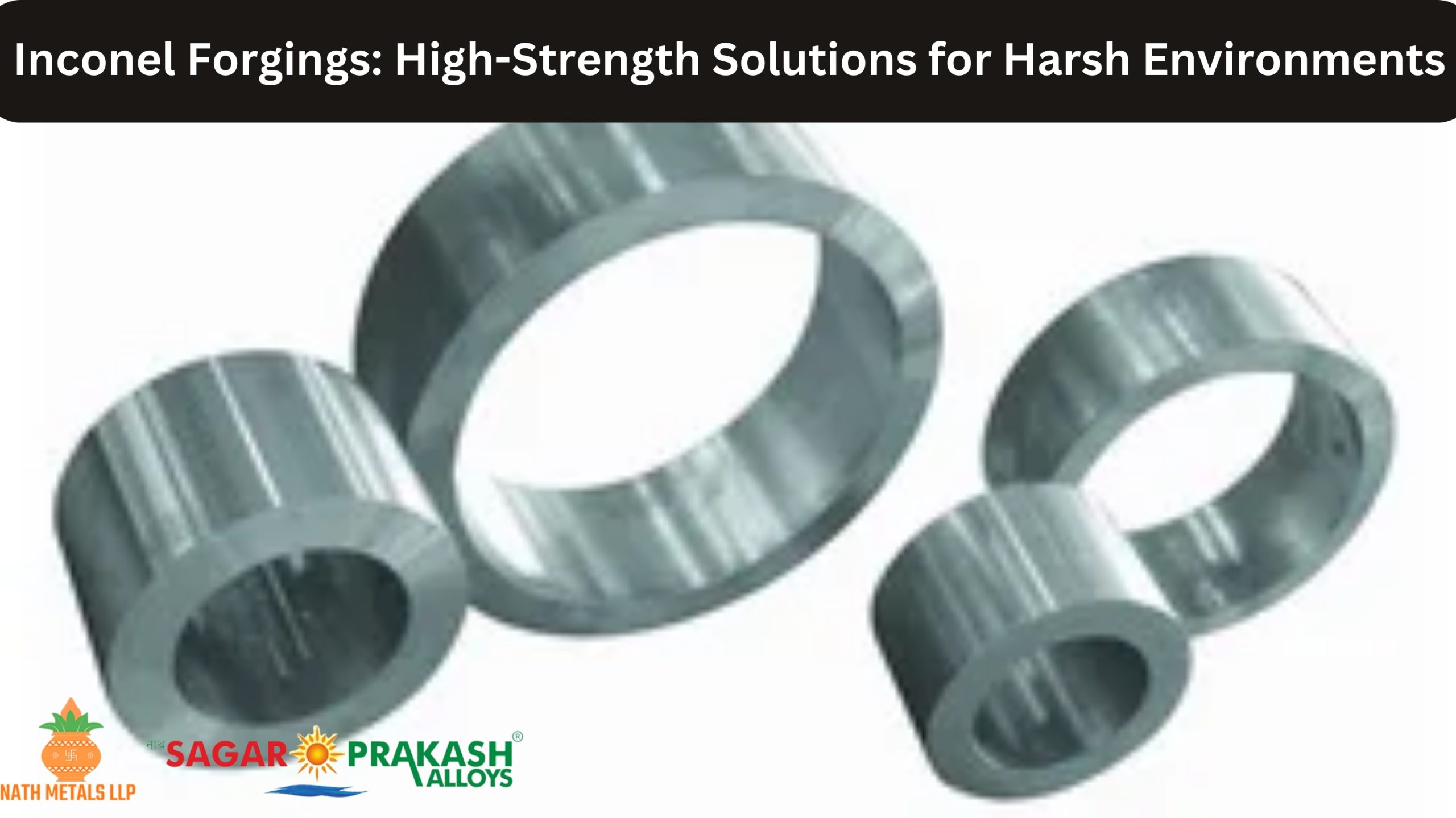
In extreme environments such as high temperatures, corrosive gases, and high-pressure conditions, traditional materials such as Steel and Aluminium may not suffice. In such cases, materials like Inconel offer a superior alternative. Inconel is a family of Nickel-Chromium-based superalloys that exhibit exceptional resistance to high temperature, oxidation, and corrosion, making them ideal for various demanding applications. This blog post will explore everything you need about Inconel forgings, from its composition to applications and benefits.
1. Composition and Characteristics:
In different proportions, nickel, chromium, and other metals like molybdenum, cobalt, and iron make up inconel alloys. High temperature strength, superior resistance to oxidation and corrosion, and strong fatigue resistance are just a few of the special qualities that these alloys possess. They are resilient in harsh conditions where traditional materials would break down. Each alloy is specially formulated to meet the needs of a particular application. Inconel is available in more than 20 grades, each with unique properties.
2. Applications of Inconel Forgings:
Numerous industries, including aerospace, chemical processing, oil and gas, power generation, and automotive, have made extensive use of Inconel forgings. Inconel is used in the aerospace industry to make turbine blades, exhaust systems, heat shields, and combustion chambers for aircraft engines. Reactors, heat exchangers, boilers, and other equipment are made of Inconel in chemical processing facilities. It is utilized in the production of downhole tools, wellhead equipment, and subsea manifolds in the oil and gas sector. Inconel is used in exhaust systems in the automotive industry to withstand high temperatures and stop corrosion.
3. Benefits of Inconel Forgings:
The unique combination of properties that Inconel possesses provides numerous benefits for engineers and end-users alike. Inconel forgings are resistant to high temperatures, corrosion, and oxidation, giving them a longer lifespan than traditional materials. They are also less prone to fatigue and creep, making them ideal for parts that endure high stress. In addition, their high strength allows for the manufacture of lighter-weight parts that can withstand extreme conditions, enhancing fuel efficiency, and reducing emissions.
4. Manufacturing Process:
The most popular process for producing Inconel parts is forging. The metal is heated to a predetermined temperature during the forging process, after which it is shaped with a hammer or press. A part that is homogeneously dense, highly robust, and without any gaps or defects is the end product of this process. Although both hot and cold forging are possible, hot forging is typically recommended for Inconel alloys. Finer grain size, enhanced mechanical qualities, and increased uniformity are the outcomes of hot forging.
5. Cost Considerations:
Forgings made of Inconel cost more than forgings made of more traditional materials like steel or aluminum. However, the requirement for parts with high strength and resistance to harsh environments frequently justifies this expense. Long-term cost savings are achieved because of the extended lifespan of Inconel forgings, which also lowers maintenance expenses, downtime, and equipment replacement costs.
Conclusion:
Hard environments can benefit greatly from the high performance and dependability of Inconel forgings. They outperform traditional materials in applications where extreme temperatures, corrosion, and oxidation are present because of their special combination of properties. Many industries have used Inconel forgings because of their high strength, resistance to fatigue and creep, and improved fuel efficiency. In many applications, the longer lifespan and lower maintenance costs of Inconel forgings make them worth the higher cost.