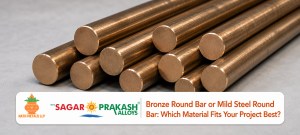

Buying a C95400 round bar without checking it properly can cause problems later, sometimes months after it has gone into a machine. A poor-quality batch might look fine and still fail under load. Checking the material before you accept it saves time and money, and stops the wrong bar ending up in a finished part. This guide covers what to check on a C95400 round bar before purchase.
What Is a C95400 Round Bar?
C95400 is an aluminium bronze alloy, made mainly from copper, aluminium and iron, with a bit of nickel added to improve strength and corrosion resistance. It does well in seawater and does not gall easily under friction. This is used in pump shafts, valve stems and bushings.
Why Inspect a C95400 Round Bar Before Purchase?
Checking the bar before it goes into production catches problems early. A bar that has not been heat treated properly, or has hidden porosity, can look normal and still crack under load. In most cases the supplier will not catch this for you. Replacing a poor-quality bar after installation costs a lot more than catching it at the gate.
Step 1: Verify the Material Grade and Specifications
Start by confirming the bar is actually certified C95400 aluminium bronze, not just labelled that way. Check the supplier references ASTM B505 or B150. Then match diameter, length and tolerance against the drawing.
Review Material Test Certificates (MTC)
The MTC shows chemical composition, which needs to sit within C95400 limits for copper, aluminium, iron and nickel. It also lists tensile and yield strength from the production heat. Every certificate should carry a heat number that ties back to the bar in hand.
Step 2: Inspect the Surface Condition
Look over the full length of the bar, and inspect it too. Scratches, dents, cracks and oxidation point to poor handling or storage. Machining marks can hide under a light polish, so check under strong light before accepting.
Step 3: Measure Dimensions and Tolerances
Check diameter at three points along the bar, not just one end, using a calibrated caliper or micrometer. Confirm overall length and check straightness by rolling the bar on a flat surface. If it falls outside tolerance, send it back.
Step 4: Evaluate Mechanical and Material Quality
A hardness test gives a quick read on whether heat treatment was done consistently across the bar. Check tensile and yield strength figures against what the part needs to handle. A bushing does not need the same properties as a shaft under continuous torque.
Step 5: Check for Manufacturing Defects
Porosity and inclusions inside the bar will not show up in a surface check. For anything critical, ask for ultrasonic testing results. The grain finish should look consistent across the cross-section, otherwise the casting or rolling was not done properly.
Step 6: Confirm Packaging, Identification, and Traceability
Every bar needs a stamped heat number, matching the paperwork that comes with it. Labels should line up exactly with the MTC, no mismatched batch numbers. Packaging needs to protect the bar from corrosion and knocks in transit.
Step 7: Assess Supplier Documentation Before Approval
Documentation should arrive with the shipment, not turn up by email weeks later. Go through the certification, inspection report and compliance statement against what was specified.
Questions to Ask the Supplier Before Purchase
Ask if inspection reports are available for that heat number. Ask if the material meets the exact ASTM standard on the order. Ask where the material came from and what checks the supplier runs.
Common Inspection Mistakes to Avoid
Judging a bar on looks alone misses internal problems and composition issues. Skipping certification means you might accept mismatched material without realising it. Not measuring dimensions properly causes machining problems later, and skipping traceability makes defect claims harder to sort out.
Inspection Checklist for Buying a C95400 Round Bar
Confirm material grade, check the surface, measure dimensions against the drawing. Check mechanical properties, look for manufacturing defects, and go through the certification. Then check packaging and traceability before sign off.
Conclusion
A good inspection process protects you at every step of buying a C95400 round bar, from checking the grade to looking at the paperwork. Getting the certification, dimensions and mechanical properties right means the bar performs the way it should once installed. Time spent checking before you buy saves more time and money later.